GYDE FIT
Turning motion technology into a real trainer-like experience.
- Project scope
- 0 → 1 Product design , branding , UI/UX
- Role
- Primary product designer, owning: Product direction, UX, UI , Branding.
- Tools
- Figma, Gimp, AI image geneation,
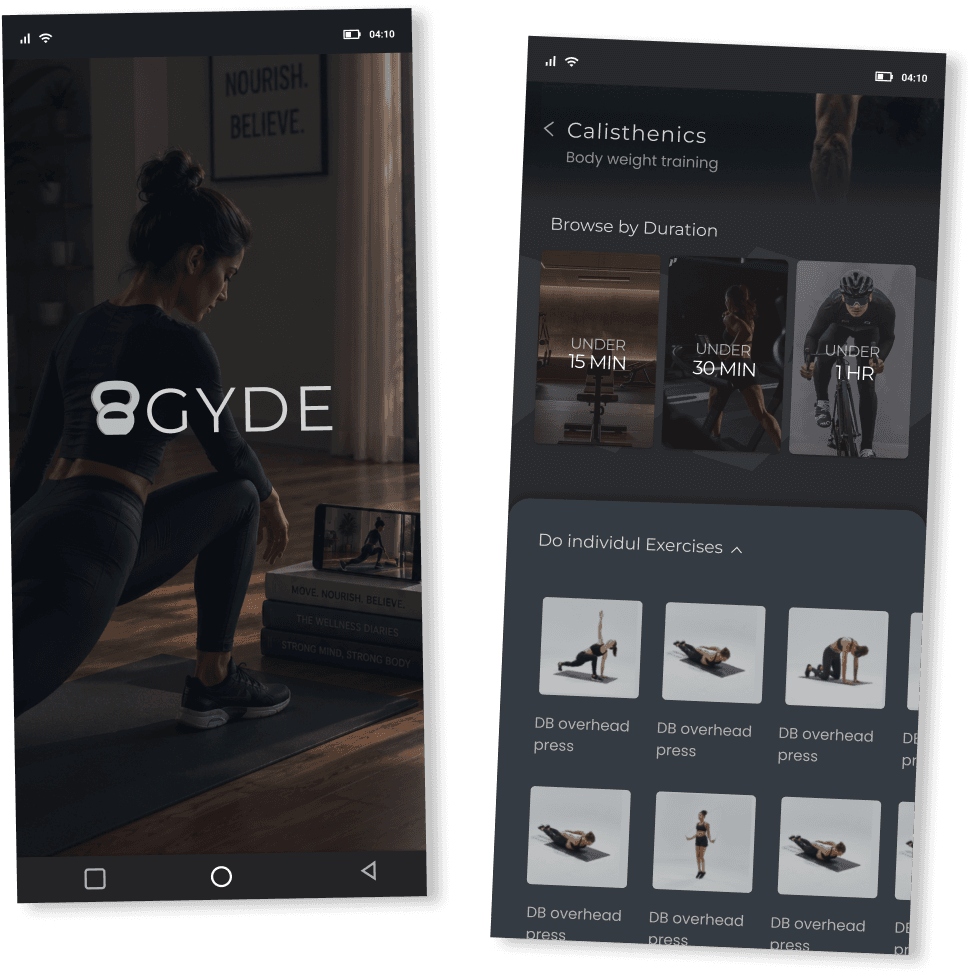
The outcome
Turned an early-stage technology concept into a research-grounded, beta-ready fitness platform prepared for market testing, shaped by real user needs and market opportunities.
The story
Once upon a time, we had a newly developed AI-driven movement detection technology and an idea: use it to create personalised coaching.
But there were a lot of unanswered questions. What kind of coaching? For whom? Was there a real need? And what could the business look like?
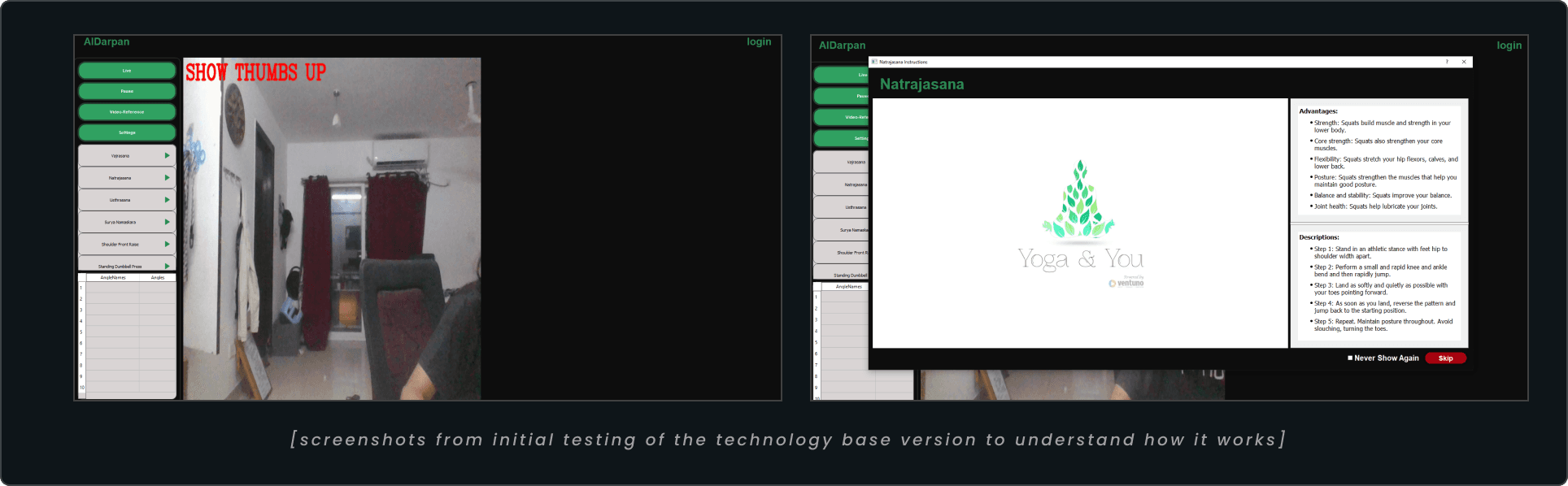
Given that the AI model was trained on exercises/ yoga data, fitness became our starting point — but we were open to where the technology and research could take us.
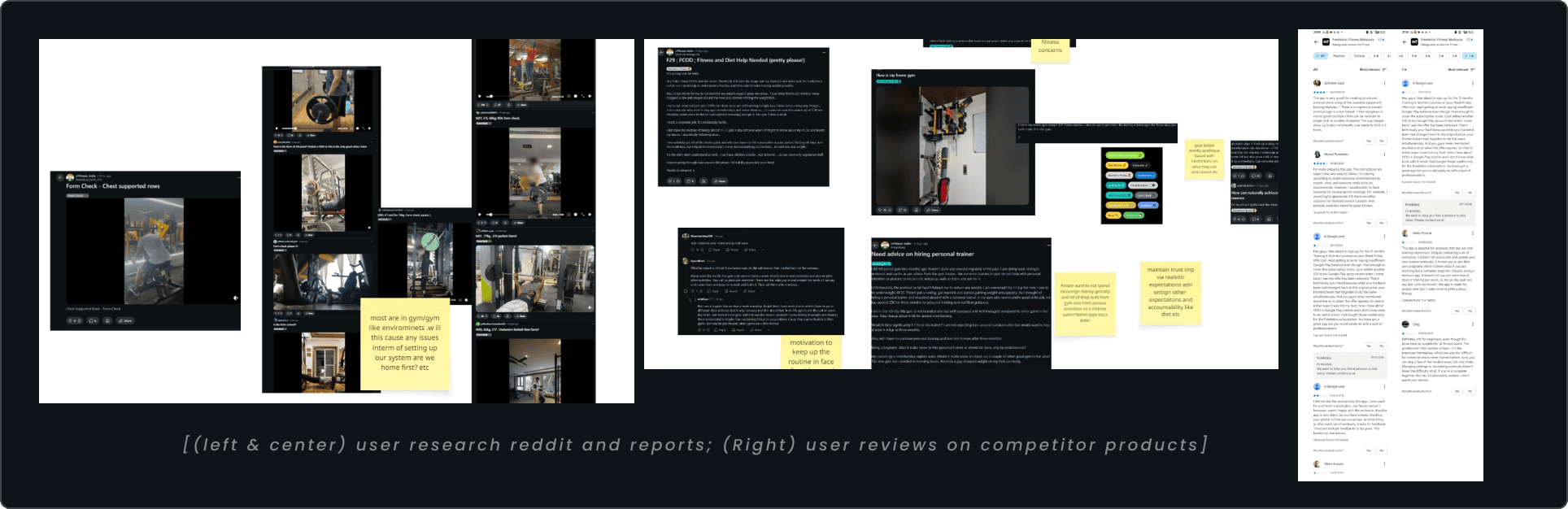
I explored the opportunity for the Indian market through competitor analysis, app reviews, Reddit conversations, market reports and research papers, supplemented by conversations with people we had access to in the fitness space.
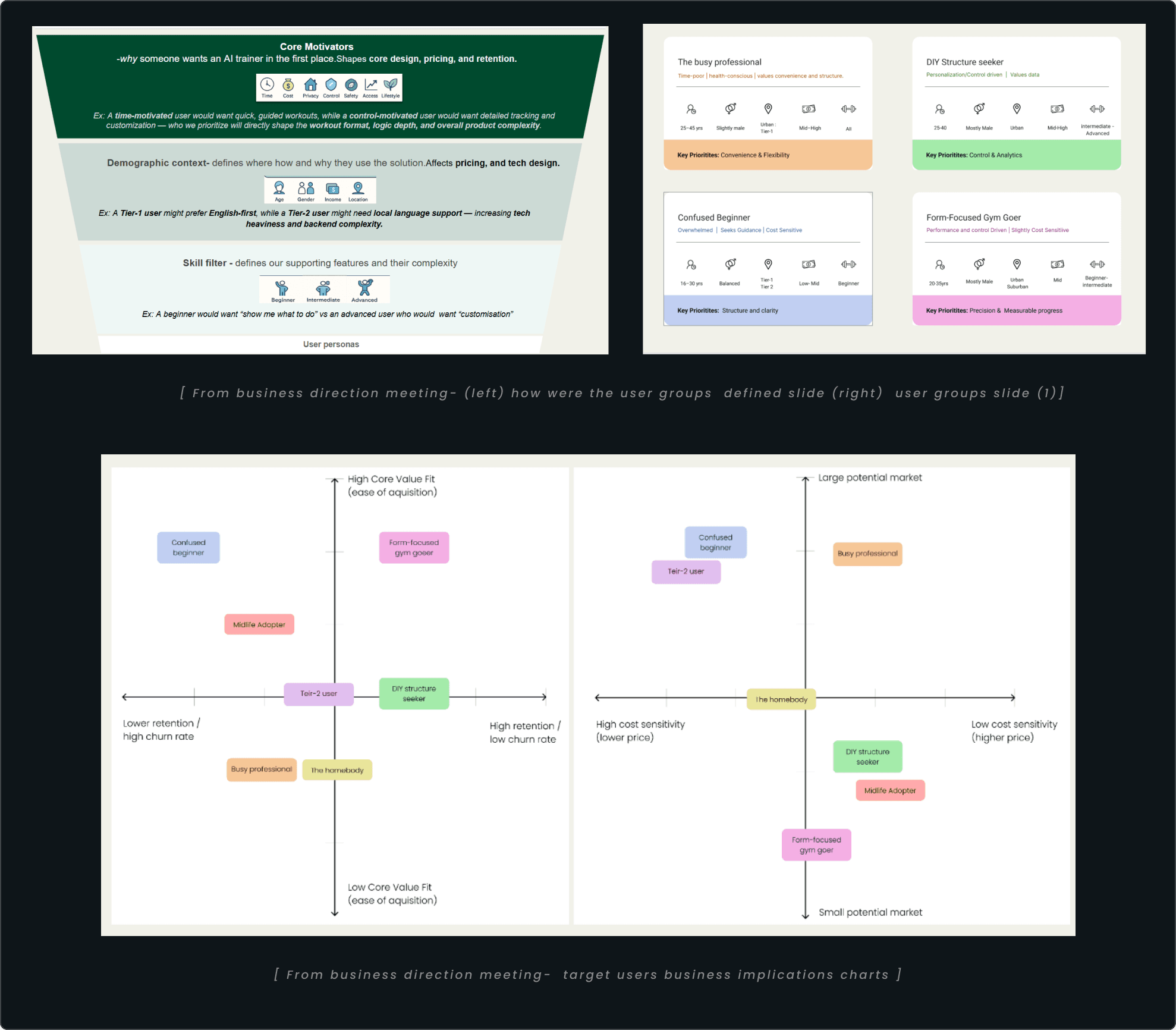
potential applications-user groups were identified. Their business trade-offs , design /tech implications etc were discussed with the stakeholders to set the product direction - a fitness app as our flagship solution .
Sports and Physiotherapy coaching-assistant solutions for providers as the future-roadmap.
Used research findings to shape an experience that could meaningfully integrate the underlying technology, refining it through stakeholder reviews and user feedback. user needs /goals → core experience → functionality → flows/features → interface.
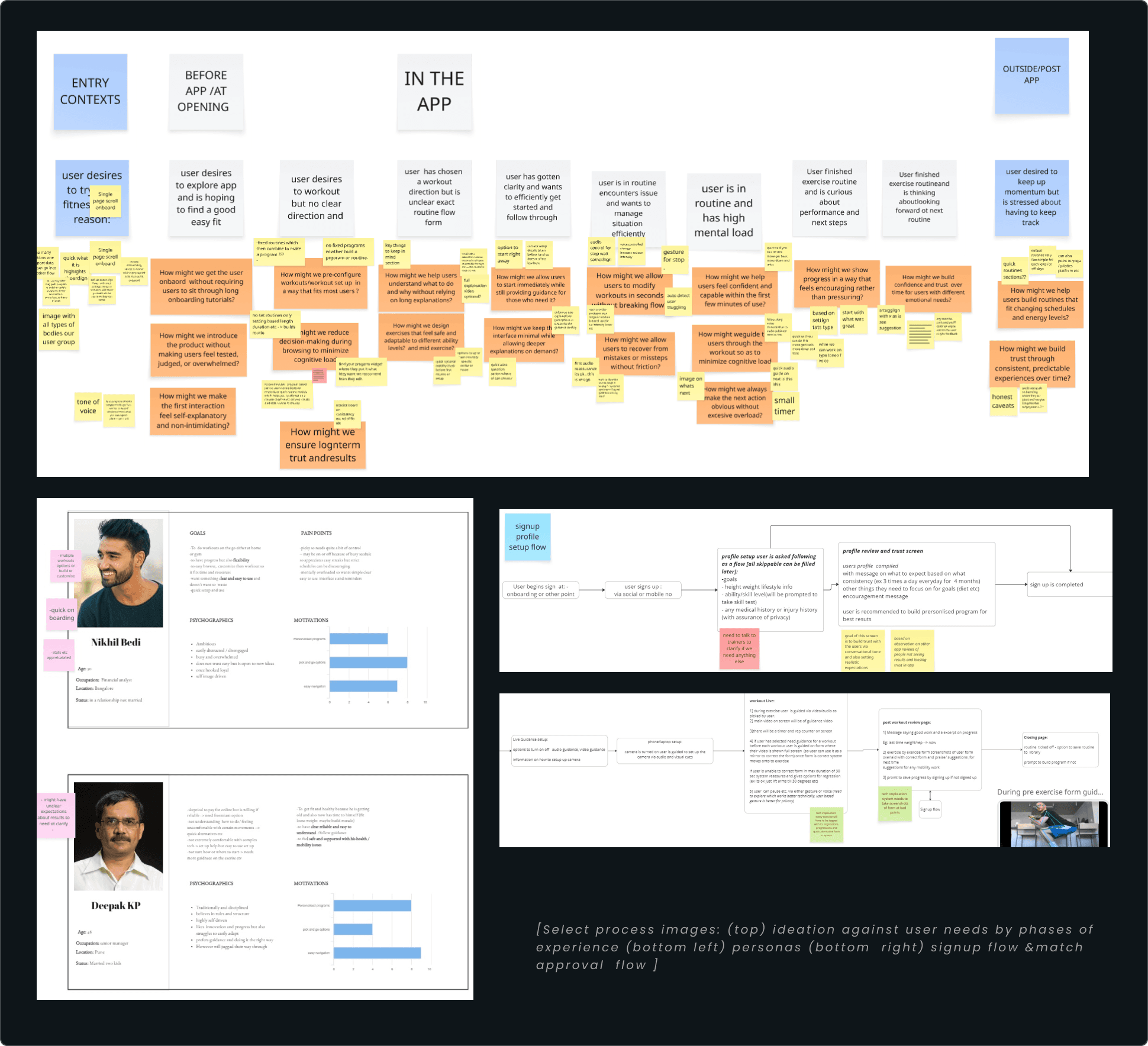
My role spanned product design and business development, with product decisions shaped by market research, business opportunities, and strategic direction. I also led the visual identity, logo, marketing website, AI-generated visual assets, and design system, building a cohesive foundation for the product and its future growth.
SELECT DECSIONS
1. COACHING ENGINE
THE CHALLENGE
How do we take the raw body analysis data and turn it into a coaching experience ?
THE APPROACH
I studied yoga and Pilates teacher training and observed coaching sessions, particularly online classes, to map how instructors guide clients throughout a session and identify practices that could inform Gyde’s coaching experience.
THE DESIGN & RATIONALE
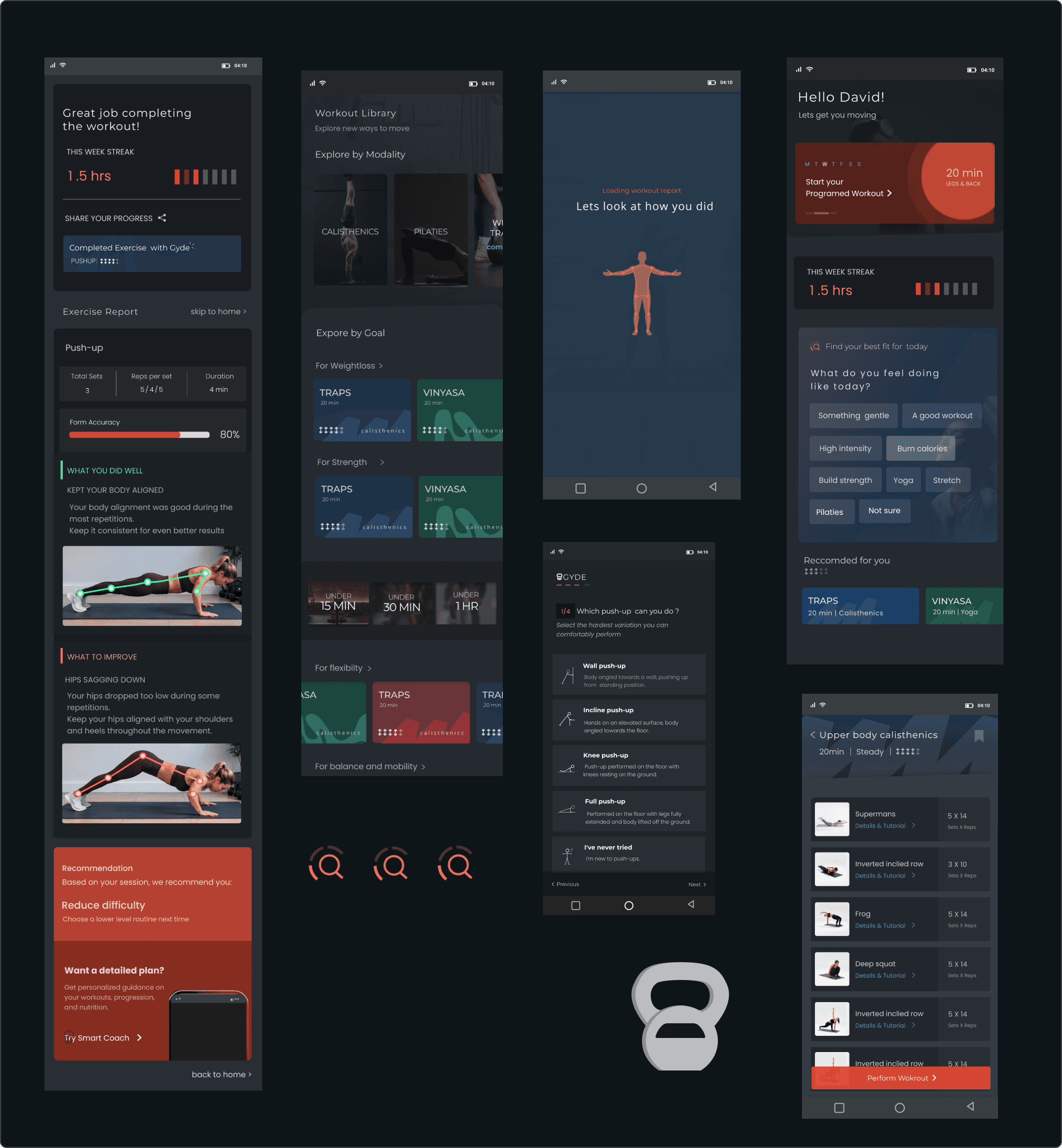
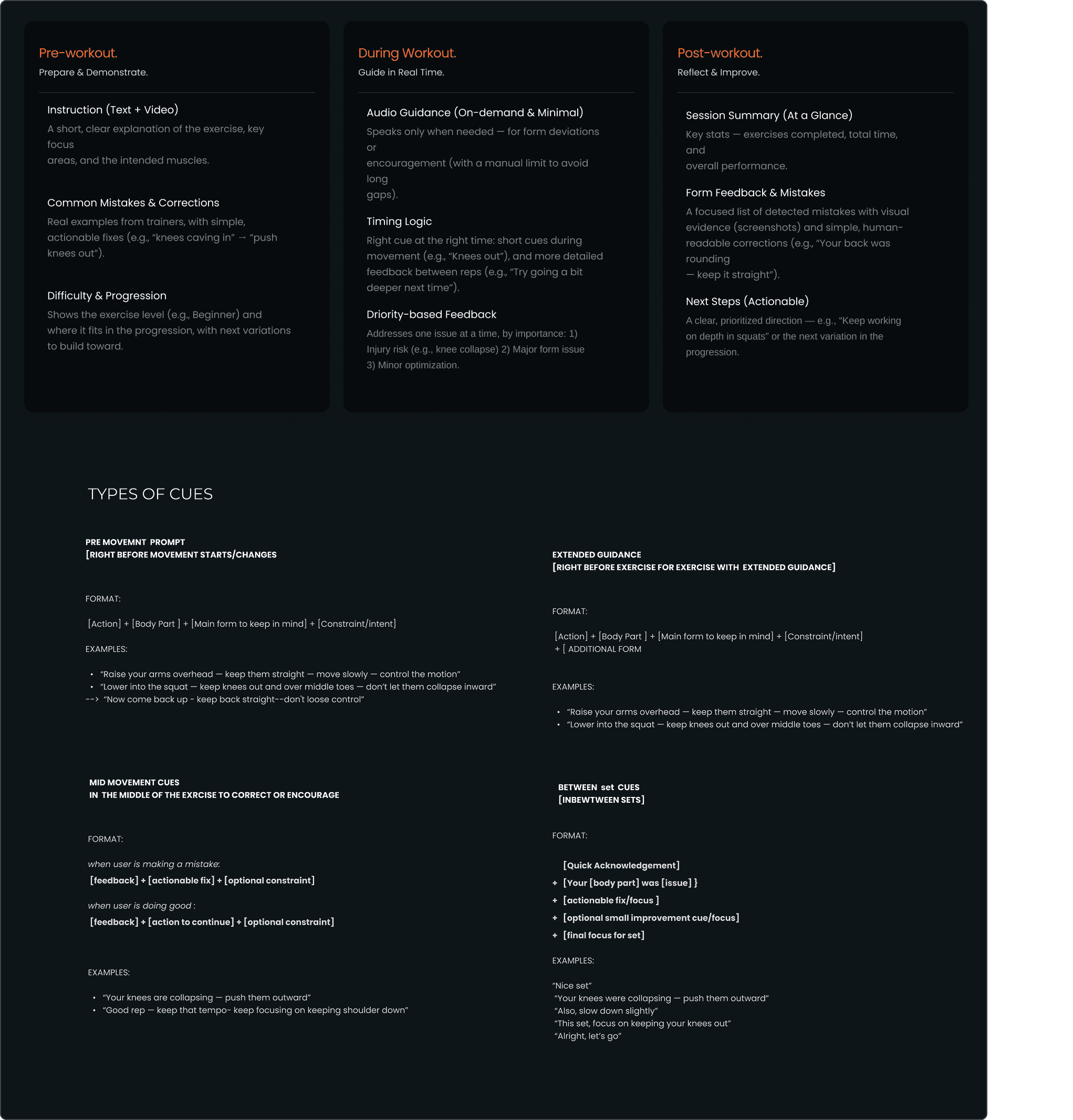
Human coaching involves multiple forms of guidance—from visual demonstrations and verbal cues to real-time corrections and post-workout feedback. I translated these into a three-phase digital coaching experience, adapting the type and timing of guidance to each stage of a workout.
2. WORKOUT DISCOVERY
THE CHALLENGE
How might we help users discover the right workout in an extensive exercise library without relying on full customisation or manual browsing?
THE APPROACH
I explored duration-based workout customisation, but it added friction and made workouts feel randomly generated rather than curated. I pivoted towards a more guided discovery experience, inspired by boutique services that understand customer preferences before presenting tailored options.
THE DESIGN & RATIONALE
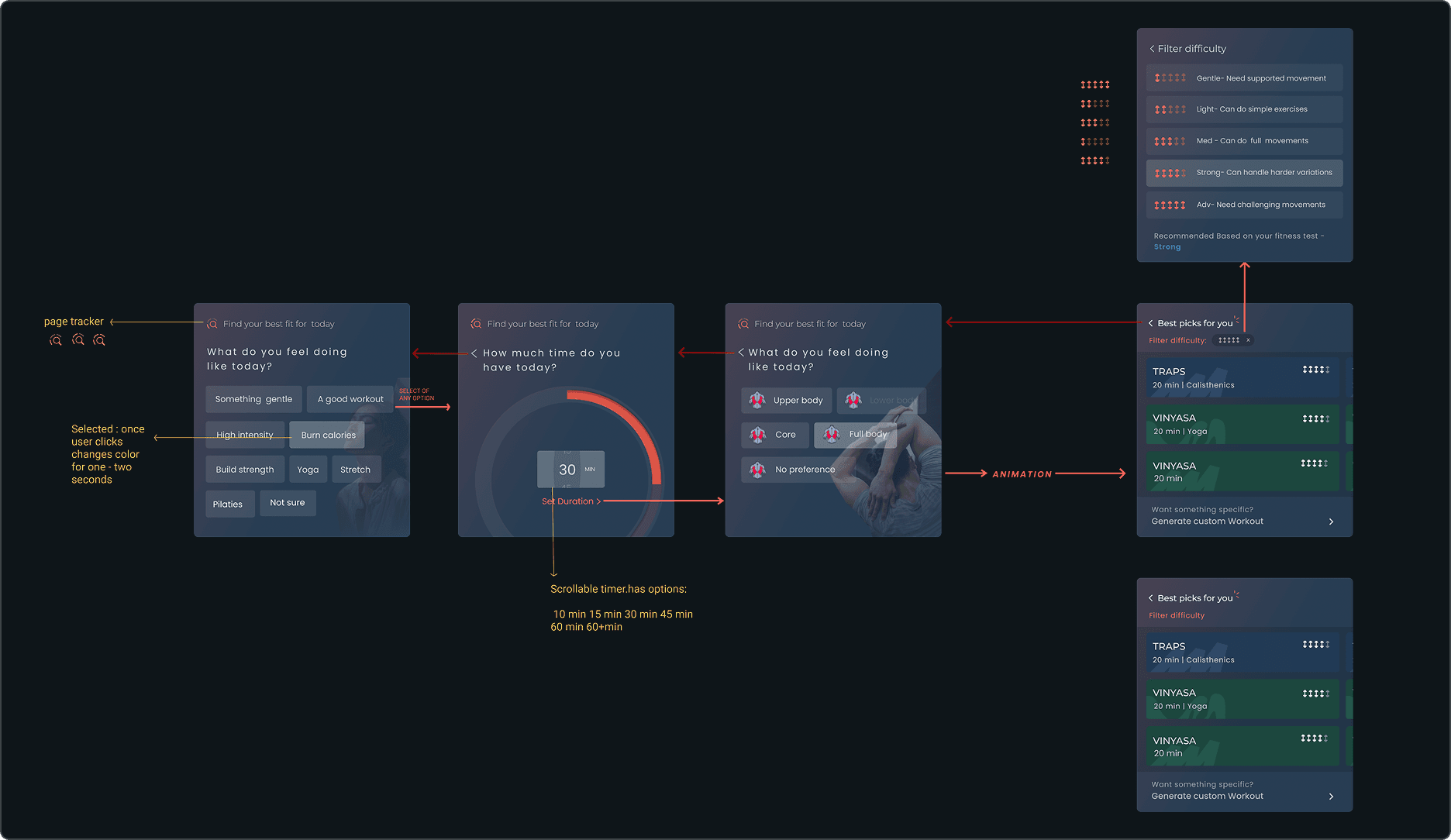
I designed a “Find Something for Today” widget that asks three quick questions:
- What do you feel like doing? Movement type or modality, such as stretching or yoga.
- How much time do you have? Preferred workout duration.
- Any particular focus? A fitness goal or body area.
The system recommends three to four relevant routines based on their answers. Combined with recommendations informed by previous activity, this created a more personalised, curated home experience while keeping the paid tier's personalised programs distinct.
3. EXERCISE TAXONOMY
THE CHALLENGE
Deciding which exercise attributes to capture and how to structure them to support discovery, routine generation, and intelligent substitutions while keeping the backend data consistent and maintainable.
THE APPROACH
I studied how exercises differ across modalities, movement patterns, and difficulty levels, then mapped their relationships and progressions to build a consistent classification system.
THE DESIGN & RATIONALE
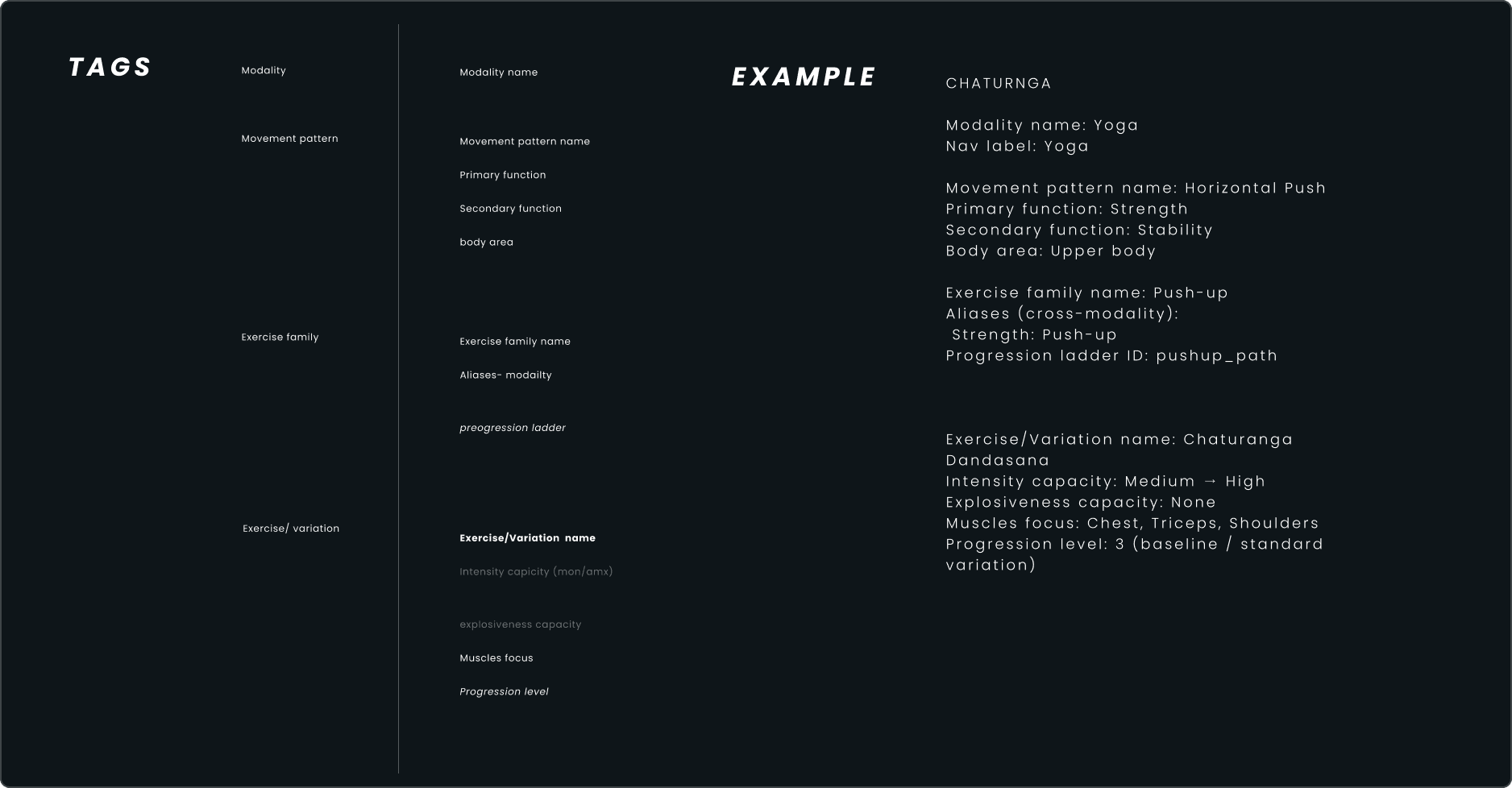
The structure is based on modality → movement pattern → exercise family → variation, with defined attributes for function, body area, target muscles, intensity, and progression level.
This ensures each exercise retains its relevant characteristics while linking equivalent movements across modalities to support discovery, substitutions, and AI-driven routine generation.